Electric freight is no longer in its experimental phase. Today, the pace, scale, and structure of network expansion are among the clearest indicators of electric freight maturity.
Early conversations focused on whether battery-electric trucks could move freight reliably in real-world conditions. That question has largely been answered. The industry is now focused on how quickly electric truck charging infrastructure can expand to support sustained, commercial-scale operations across active freight corridors.
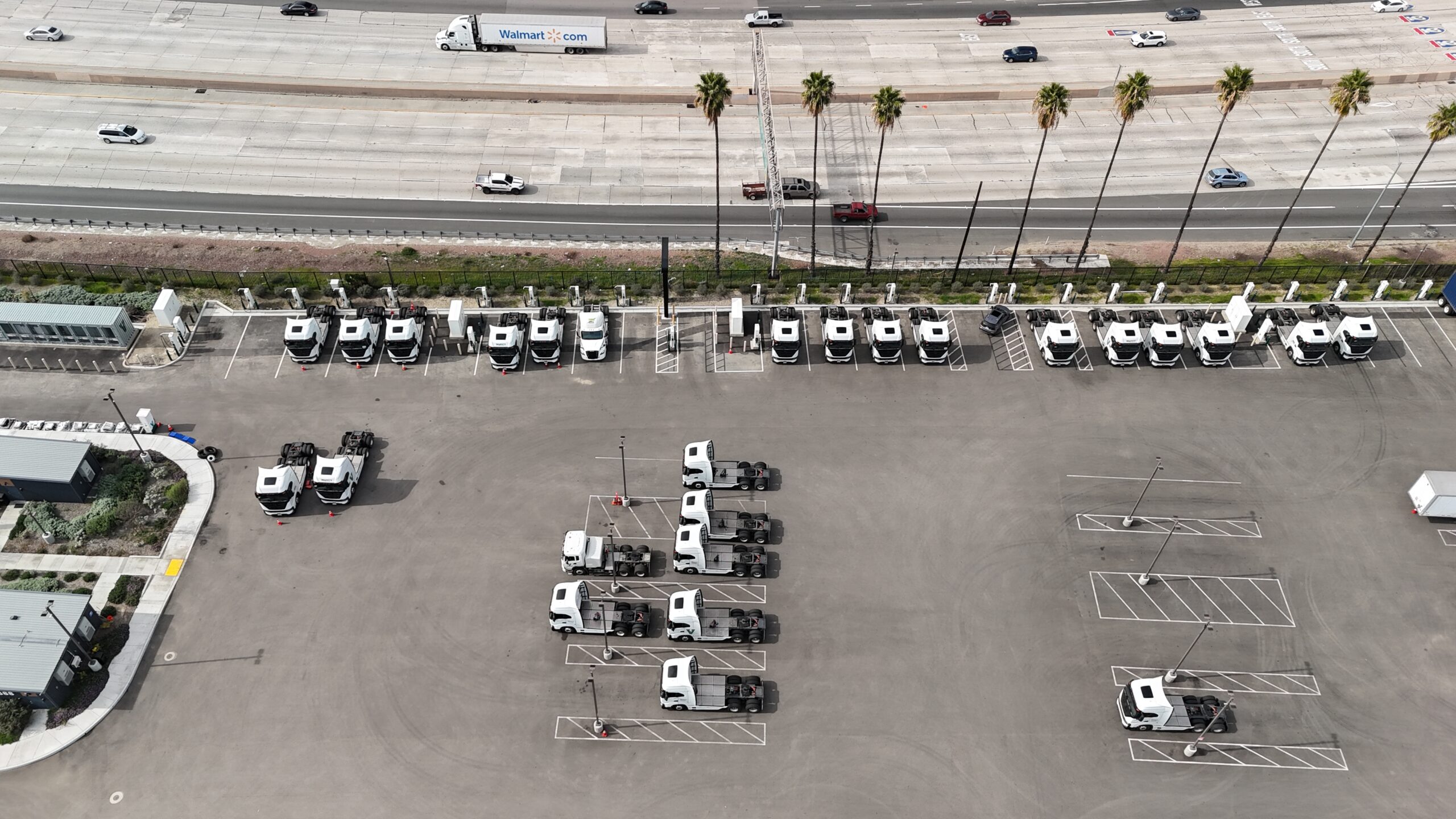
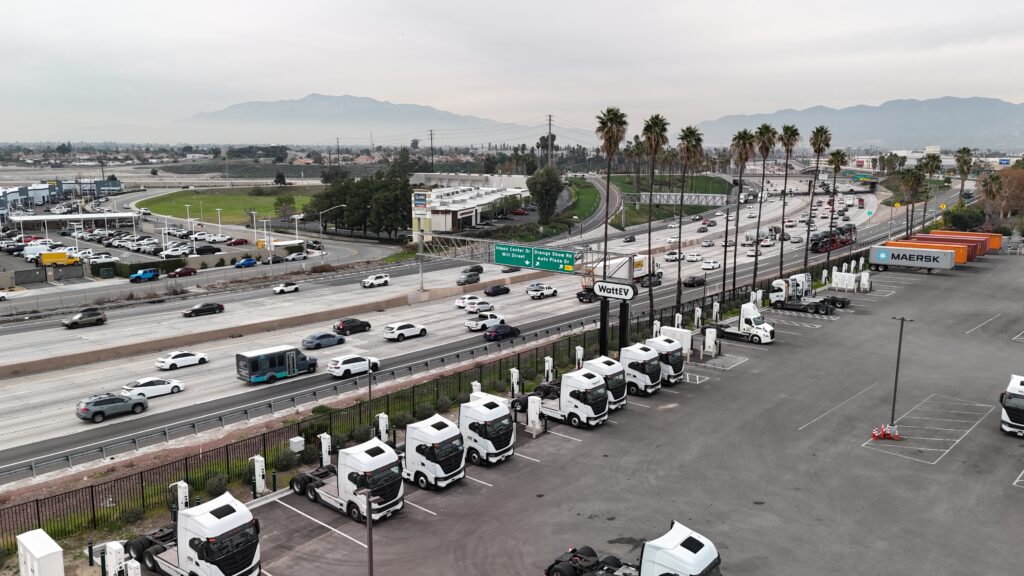
WattEV’s recent San Bernardino Charging Depot expansion, located along a high-volume inland freight route, reflects this shift. Rather than introducing a new pilot site, the expansion demonstrates what happens when utilization, demand, and infrastructure planning align within an operating charging depot network.
Why Network Expansion Reflects Industry Maturity
In early-stage markets, infrastructure growth often appears as isolated pilots or demonstration projects. These sites exist to validate technology rather than support daily freight movement.
In mature sectors, expansion is driven by proven performance. Infrastructure grows based on utilization data, repeatable deployment models, and corridor-level demand. This is why electric freight corridors are now forming as interconnected systems rather than standalone locations.
Electric freight is entering this phase. Network expansion increasingly strengthens existing sites and extends regional coverage, signaling that electric freight is no longer testing feasibility but scaling operations.
San Bernardino: Expansion as a Signal of Readiness
The San Bernardino Charging Depot expansion is not simply an increase in capacity. It is a signal that electric freight operations at the site have progressed beyond early adoption.
The expansion reflects a deliberate infrastructure strategy shaped by real-world freight activity, including placement along a major inland freight corridor, proximity to regional distribution networks, and coordination across public and private stakeholders. The site is also designed to support future megawatt charging systems, reinforcing its role in long-term electric truck charging infrastructure planning.
Expanding an active site requires a different level of confidence than launching a new one. It indicates that existing operations justify additional investment and that demand is expected to grow.
What Electric Freight Maturity Looks Like in Infrastructure Design
As electric freight matures, infrastructure is no longer optimized solely for early adopters. It is built to scale alongside fleet growth and increasing energy demand.
Mature scalable EV charging infrastructure is typically modular by design, allowing capacity to increase without disrupting operations. It is integrated with fleet routing, dispatch, and dwell-time planning, and engineered to accommodate future MCS and solid-state transformer requirements within grid-ready charging infrastructure.
This level of planning would not occur without confidence in long-term electric truck adoption. Infrastructure owners expand existing sites because utilization and performance justify continued investment.
Freight Electrification Funding Follows Proven Operations
Another clear indicator of electric freight maturity is how freight electrification funding is allocated.
As the market evolves, funding increasingly prioritizes operating infrastructure rather than conceptual projects. Capital flows toward sites with demonstrated utilization, expansion potential, and alignment with California zero-emission freight policies.
Public-private partnerships now favor infrastructure that supports long-term reliability, regulatory alignment, and capital efficiency. Expansion at operating depots reflects this shift from speculative investment to systematized deployment.
How Network Expansion Accelerates Fleet Adoption
Every network expansion reduces uncertainty for fleets evaluating electrification.
As charging networks grow, fleets gain redundancy across corridors, predictable access to high-power charging, and confidence in route planning. When infrastructure is integrated with logistics hubs and distribution centers, fleet electrification becomes a strategic transition rather than a risk-based experiment.
Seeing scalable EV charging infrastructure expand at active sites gives fleets a clear signal that electrification is operationally viable at scale.
Infrastructure Growth Signals Readiness
Infrastructure expansion is one of the strongest indicators of market maturity. It reflects confidence built on performance, utilization, and long-term planning.
The expansion of WattEV’s San Bernardino Charging Depot signals more than added capacity. It demonstrates that electric freight operations are stable enough to warrant continued investment and growth across the broader network expansion strategy.
For fleet operators, this is a clear signal. Commercial electric freight is no longer emerging. It is scaling.
Read more about how WattEV’s infrastructure strategy supports reliable, scalable electric freight operations across California: https://wattev.com