
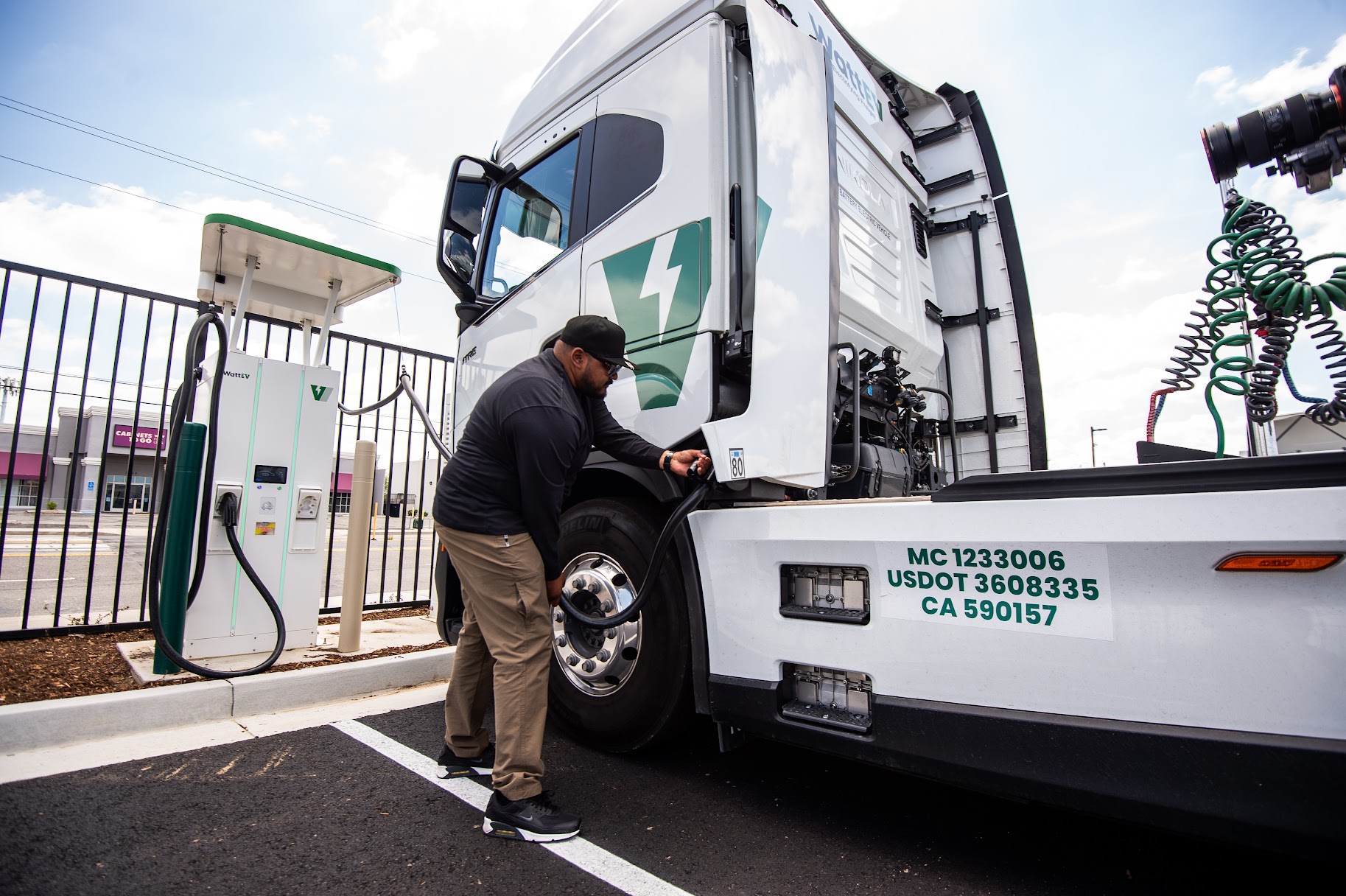
Why Charging-as-a-Service is Key to Fleet Electrification
Fleet electrification is not just about acquiring electric trucks. It is about keeping them charged, moving, and profitable. The challenge is that building and maintaining reliable charging infrastructure can be expensive, time-consuming, and technically complex.
Charging-as-a-Service (CaaS) solves this by giving fleets seamless access to managed, high-power charging through a predictable subscription model. With WattEV’s CaaS solution, fleets gain instant access to reliable charging, energy management, and uptime support without owning or operating any charging equipment.
What Is Charging-as-a-Service (CaaS)?
Charging-as-a-Service is a new solution that delivers turnkey EV fleet charging infrastructure for shippers and carriers. Instead of building and maintaining depots, fleets pay a rate for access to WattEV’s network of high-power charging depots, energy management, and 24/7 operational support.
This model removes capital barriers and accelerates electric truck adoption by turning charging into a predictable operating expense instead of a costly infrastructure investment.
How Charging-as-a-Service Works
- Fleet Assessment: WattEV evaluates routes, duty cycles, and energy needs to determine the best charging access plan.
- Plan Selection: Fleets choose depot access, energy tiers, and service levels based on utilization.
- Full-Service Management: WattEV manages grid connections, equipment, energy sourcing, and maintenance.
- Predictable Payments: A fixed rate covers charging, energy, uptime, and software integration.
- Scalable Flexibility: Fleets can scale charging access as their electric operations expand.
CaaS vs. Charging Ownership: Which Is Better for Your Fleet?
When electrifying, fleets face three main paths: owning the infrastructure, managing it through an energy partner, or subscribing to a Charging-as-a-Service model.
Owning Charging Infrastructure
- Requires major upfront investment in hardware, grid upgrades, and land.
- Puts the burden of maintenance, permitting, and energy optimization on the fleet.
- Limits flexibility if routes or technology change.
Traditional Energy Contracts
- Provide electricity but no infrastructure or operational support.
- Fleets must handle installation, maintenance, and optimization.
- Suitable for fleets with in-house energy management expertise.
Charging-as-a-Service (CaaS)
- No upfront capital required because WattEV builds, owns, and operates the infrastructure.
- Bundles charging access, energy management, and uptime services into one solution.
- Provides predictable costs, faster deployment, and flexible scaling across routes and regions.
Key Benefits of WattEV’s Charging-as-a-Service Model
- Faster Electrification: Deploy charging immediately without construction delays.
- Lower Financial Risk: Eliminate capital expenditures and replace them with predictable operating costs.
- Optimized Energy Use: Smart load balancing and renewable energy integration improve cost efficiency.
- Higher Uptime: Managed scheduling and proactive maintenance keep trucks powered and productive.
- Sustainability Compliance: Use renewable power to meet clean truck and zero-emission regulations.
- Actionable Data: Monitor fleet performance, energy use, and total cost of ownership through WattEV telematics.
The WattEV Advantage in Charging-as-a-Service
WattEV is building one of the nation’s largest megawatt-capable electric truck charging networks, designed specifically for heavy-duty fleets. The CaaS solution combines charging access, energy management, and predictive maintenance to power long-haul and regional operations efficiently.
WattEV’s Charging-as-a-Service Includes:
- California depot access located along major freight corridors with megawatt-ready infrastructure.
- 24/7 monitoring and uptime support for dependable performance.
- Renewable energy sourcing and load optimization to reduce energy costs.
- Flexible commercial agreements that align with fleet size and utilization.
- Integration with WattEV’s Truck-as-a-Service (TaaS) for a complete electrification package.
Who Benefits Most from CaaS
WattEV’s Charging-as-a-Service model fits a wide range of fleet types and operational needs.
It is ideal for:
- Regional and long-haul carriers that need reliable high-power corridor charging.
- Private and mixed-fuel fleets scaling electric truck adoption.
- 3PLs and logistics providers that require flexible access to multiple depots.
- Companies pursuing sustainability goals or needing compliance with clean truck rules.
CaaS: The Smarter Way to Electrify Your Fleet
Charging-as-a-Service is more than a convenience. It transforms how fleets access power, manage costs, and scale electric operations.
With WattEV’s CaaS, fleets get ready-to-use charging, intelligent energy management, and guaranteed uptime. This allows fleets to accelerate electrification without taking on financial or operational risk.
Ready to Power Your Fleet with Charging-as-a-Service?
Contact WattEV today to design a Charging-as-a-Service plan tailored to your routes, budget, and operational goals.
Together, we can build the infrastructure that keeps your electric fleet moving.
Frequently Asked Questions
What is Charging-as-a-Service (CaaS)?
CaaS is a subscription model that provides fleets with turnkey access to EV charging infrastructure, energy, and maintenance support for a predictable monthly fee.
How does CaaS reduce costs?
CaaS removes upfront capital requirements, optimizes energy use, and ensures consistent uptime, all of which lower the total cost of ownership.
Can WattEV’s CaaS integrate with Truck-as-a-Service (TaaS)?
Yes. WattEV’s TaaS and CaaS platforms work together to offer trucks, charging, and maintenance under one comprehensive solution.
Where are WattEV charging depots located?
WattEV operates megawatt-capable charging depots along California’s major freight corridors and continues to expand nationwide.
Can fleets scale usage over time?
Yes. CaaS contracts are flexible and designed to grow with your fleet’s electric adoption and route network.