TLDR
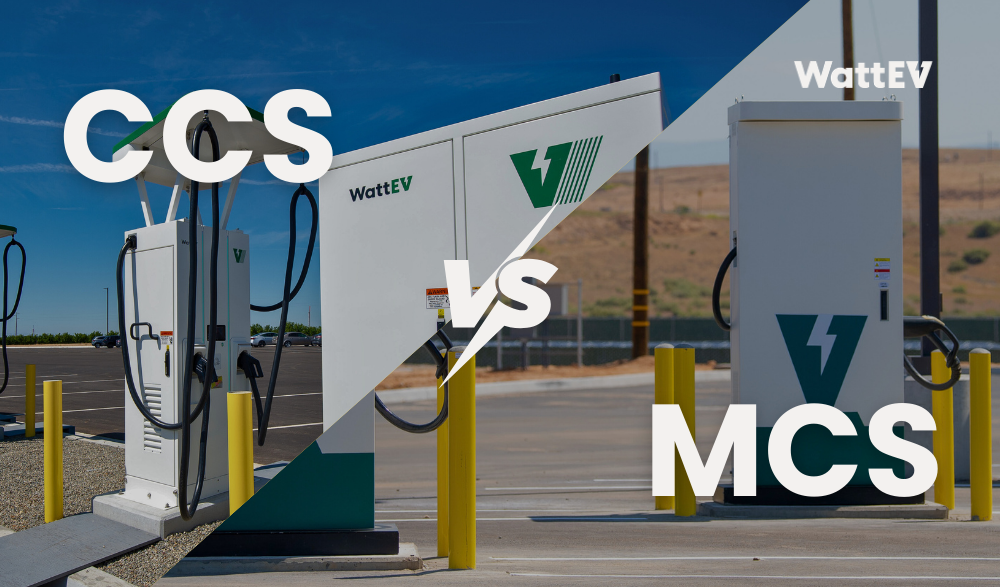
CCS (Combined Charging System) is the current standard for heavy-duty electric truck charging, delivering up to 350 kW. MCS (Megawatt Charging System) is the next-generation standard, delivering over 1 MW of power to charge a Class 8 truck in 30 minutes or less. Both standards work together as freight electrification scales. CCS powers operations today. MCS is how long-haul freight gets to full electrification tomorrow.
The Charging Standard Question Every Fleet Is Asking
As electric truck adoption accelerates across California and the broader US market, fleet operators are facing a question that goes beyond which truck to buy: which charging standard will power their operations, and how should they plan for what comes next?
Two standards are shaping the answer. CCS, or Combined Charging System, is the technology that powers most electric trucks on the road today. MCS, or Megawatt Charging System, is the next-generation standard designed specifically for the power demands of heavy-duty long-haul freight.
Understanding the difference between CCS and MCS is not just a technical exercise. It is a fleet planning decision. The right approach depends on your routes, your dwell times, and how quickly you need to scale. This guide breaks down both standards and explains how they work together as freight electrification matures.
What Is CCS Charging?
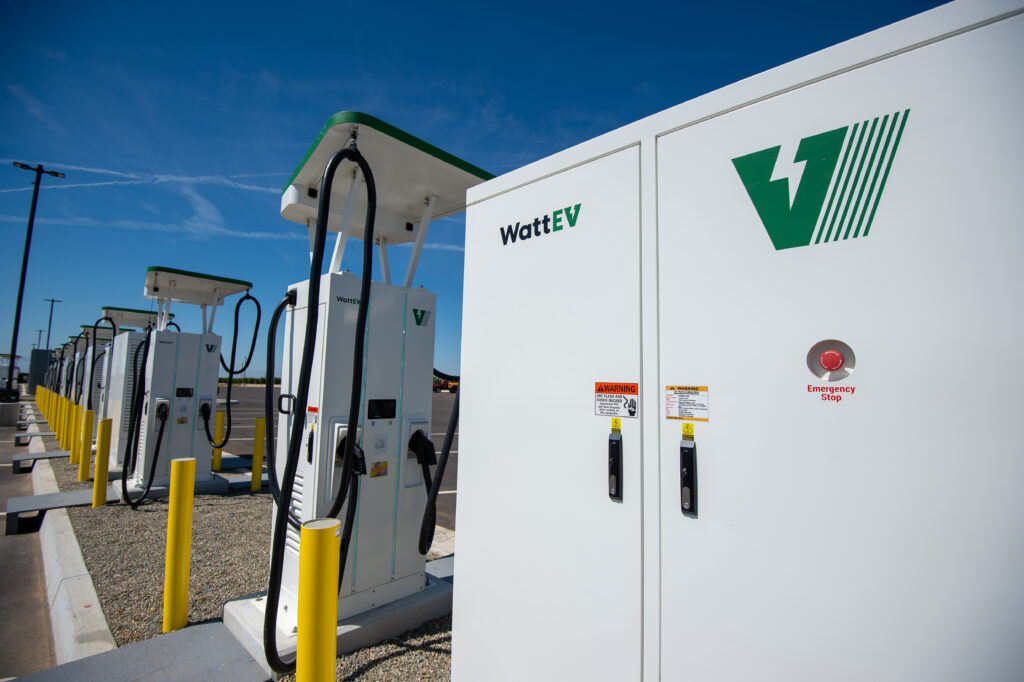
CCS stands for Combined Charging System. It is the most widely deployed DC fast charging standard for electric vehicles in North America and Europe, and it supports both light-duty and heavy-duty applications.
For heavy-duty electric trucks, CCS chargers can deliver up to 350 kW of power. That is enough to support regional haul operations and depot-based charging where trucks have extended dwell times. Most commercial battery-electric trucks available today, including Class 8 models from major OEMs, are built to charge on CCS infrastructure.
Why CCS Works for Fleets Today
CCS charging is practical for the majority of current freight operations for a few key reasons:
- Wide infrastructure availability across California freight corridors
- Compatible with nearly all BEV trucks currently in volume production
- Cost-effective depot buildout with established supply chains
- Reliable performance for regional haul, drayage, and overnight charging scenarios
At WattEV, our depots in Long Beach, San Bernardino, and Bakersfield all support CCS charging today, with charging power scaled to meet the operational demands of commercial fleets running real freight routes.
What Is MCS Charging?

MCS stands for Megawatt Charging System. It is a newer charging standard developed specifically for heavy-duty commercial vehicles, designed to deliver power at the megawatt level rather than the hundreds-of-kilowatts level that CCS tops out at.
Under the ISO 15118-20 standard, MCS is capable of delivering between 1 MW and 3.8 MW of charging power. For a Class 8 electric truck, that translates to a full charge in approximately 30 minutes or less. That window aligns with a standard driver rest break, which means trucks can refuel on the road without adding meaningful downtime to a route.
Why MCS Changes the Economics of Long-Haul Freight
The significance of MCS is not just speed. It is what speed enables:
- Higher daily asset utilization as trucks spend less time off-route for charging
- Longer route ranges become commercially viable for battery-electric trucks
- Charging can be integrated into required rest stops with no additional schedule impact
- Fleet operators can reduce the number of trucks needed to cover a given route volume
For long-haul corridors, MCS is what makes full electrification operationally and economically competitive with diesel. CCS gets fleets started. MCS is how they scale.
CCS vs MCS: Side-by-Side Comparison
| Feature | CCS | MCS |
| Max Power Output | Up to 350 kW | 1 MW to 3.8 MW |
| Connector Type | CCS Combo 1 or 2 | MCS (ISO 15118-20) |
| Charging Time (Class 8) | 1 to 4 hours | 30 minutes or less |
| Use Case | Regional haul, depot charging | Long-haul, en-route charging |
| Availability | Widely available today | Scaling in 2025 to 2026 |
| Infrastructure Cost | Lower | Higher (offset by SST solutions) |
| Truck Compatibility | Most current BEV trucks | MCS-capable trucks (2026+) |
| Best For | Overnight and dwell-time charging | Fast turnaround, high utilization |
CCS and MCS Are Not Competitors. They Are Complements.
A common misconception is that MCS will replace CCS. That is not how the transition is likely to unfold. The two standards serve different operational use cases, and both will play an important role in a mature heavy-duty EV charging network.
Depot-based charging, where trucks return to a home base overnight or during extended breaks, is well-suited to CCS. The power levels are sufficient, the infrastructure cost is manageable, and the timing matches natural operational rhythms. Regional haul, drayage, and last-mile operations can run efficiently on CCS for the foreseeable future.
En-route charging for long-haul operations is where MCS becomes essential. When a truck is covering 400 or 500 miles in a day and cannot afford a multi-hour charging window, megawatt-level charging is the only way to keep freight moving at diesel-competitive speeds.
The practical implication for fleet operators is straightforward: build on CCS now, and design your infrastructure strategy so you can add MCS capacity as your routes and trucks require it.
How WattEV Is Making MCS Infrastructure More Accessible
One of the historic barriers to MCS deployment has been the complexity and cost of the electrical infrastructure required to deliver megawatt-level power. Conventional grid connection approaches for MCS require significant civil engineering, specialized equipment stacks, and long lead times that can make depot buildouts slow and expensive.
WattEV has developed a Solid-State Transformer, or SST, specifically to address this problem. The SST is a compact medium-voltage power conversion system that connects directly to utility lines at 12 kV to 15 kV and converts power to DC at the site level, replacing the step-down transformers, switchgear, and low-voltage rectifiers that traditional MCS installations require.
The result is a meaningfully simpler installation process, lower infrastructure costs, and faster depot buildout timelines. WattEV’s SST is designed to deliver between 1.2 MW and 3.8 MW per unit, with production-ready systems expected in 2026.
This kind of infrastructure innovation is part of how WattEV approaches the transition from CCS to MCS at its depots: not as a disruptive replacement, but as a deliberate, cost-managed upgrade path.
What This Means for Your Fleet Planning
If you are operating or planning a heavy-duty electric fleet, here is the practical takeaway from the CCS vs MCS picture:
CCS is the right foundation. It supports your current operational profile, the infrastructure exists today, and the cost-to-value ratio is strong. Focus on accessing reliable CCS depots along your corridors and building your drivers into electric operations.
Factor MCS into your infrastructure roadmap now, even if your trucks are not MCS-capable yet. Site selection, utility agreements, and civil work take time. Operators who start planning MCS capacity in 2025 and 2026 will have a meaningful head start when MCS-capable trucks begin arriving in volume.
Look for a provider that supports CCS today and has a credible MCS buildout plan. Switching infrastructure providers mid-transition is costly and disruptive. Choosing a partner who can grow with you from CCS to MCS is one of the most important decisions you can make in your electrification strategy.
Frequently Asked Questions
No. CCS and MCS use different connectors and are not interchangeable. MCS-capable trucks require a dedicated MCS port and will be equipped with it from the factory. CCS trucks will continue to charge at CCS stations.
MCS-capable heavy-duty trucks are expected to begin entering volume production in 2026. Several major OEMs have announced MCS-compatible models as part of their near-term product roadmaps.
For most regional and drayage operations, yes. For true long-haul routes where turnaround time is critical, CCS charging windows of one to four hours can create scheduling constraints. MCS is designed to close that gap.
MCS infrastructure is currently in early deployment across key freight corridors. WattEV and other network operators are investing in MCS capacity ahead of truck availability to ensure the charging network is ready when fleets need it.
WattEV operates CCS charging today across its depots in Long Beach, San Bernardino, and Bakersfield. The company is actively deploying MCS infrastructure at select locations and has developed its Solid-State Transformer to lower the cost and speed the buildout of megawatt charging capacity.
Future-Proof Your Fleet with WattEV
Whether your fleet is running regional drayage on CCS today or planning long-haul expansion that will require MCS tomorrow, WattEV has the infrastructure, technology, and operational expertise to support your transition.
WattEV offers:
- Truck-as-a-Service (TaaS): Access Class 8 electric trucks without the capital burden of ownership
- Charging-as-a-Service (CaaS): Reliable CCS charging across California’s freight corridors
- Megawatt-ready depots: Infrastructure designed to scale from CCS to MCS as your fleet grows
- SST technology: Lower-cost MCS deployment that makes megawatt infrastructure accessible faster
Contact WattEV today to discuss your fleet’s charging strategy and learn how to build an electrification roadmap that works for your routes, your trucks, and your timeline.