
BloombergNEF named WattEV a 2026 Pioneer last week. Today we look at what that recognition means, not just for WattEV, but for the challenges we are trying to solve and why we think it matters at this particular moment.
The BNEF Pioneers program has been running since 2010. In that time, it has selected 176 companies working on the hardest problems in energy and transport. Those companies have gone on to raise more than $25 billion in funding. The program is not a press release. It is a rigorous selection process, this year’s competition drew more than 600 applications from 66 countries, evaluated by the BNEF analyst team against three criteria: the potential impact on reducing emissions, the degree of innovation, and the likelihood of real-world adoption and scale.
WattEV was selected in the third challenge category: decarbonizing shipping and heavy-duty transport. This is why that specific recognition matters.
Why heavy-duty transport is one of the hardest problems in decarbonization
Passenger vehicle electrification gets most of the attention and most of the press. It is a genuine achievement. But heavy-duty freight is a different problem at a different scale. Class 8 trucks, long-haul carriers, the vehicles that move the actual physical economy operate under completely different constraints.

The energy requirements are larger. The duty cycles are longer. The charging infrastructure required does not exist in any form comparable to what passenger EVs can access. A trucking carrier cannot pull into a residential garage or a mall parking lot to charge overnight. They need megawatt-class depots positioned on freight corridors, with grid connections that can handle the load and turnaround times that work for commercial logistics.
And unlike passenger vehicles, where the environmental case has been augmented by consumer preference and government incentives, heavy-duty fleet operators are making decisions based almost entirely on total cost of ownership. There is no green premium available. If the electric option costs more per mile, the diesel truck wins, and it keeps winning until the math changes.
WattEV was built around the conviction that the math could change. That a vertically integrated model combining charging infrastructure, truck leasing, and logistics operations could get the cost of electric freight below diesel at scale, without requiring subsidies or mandates to make it work. We have been operating on that thesis in California for years, and the data supports it. We have accumulated more than seven million zero-emission miles across a fleet of 75 trucks operating on California’s busiest freight corridors. We’ve run the numbers and can confirm the electric option is cheaper, and it is cheaper without an asterisk.
What BNEF’s selection criteria actually measure

Understanding why the Pioneer award matters requires understanding what BNEF is measuring. The three criteria are emissions impact potential, technology innovation, and likelihood of adoption and scalability. They are chosen specifically to filter out innovations that are interesting in theory but face insurmountable barriers to real-world deployment.
A lot of clean energy technology fails the third test. The science works. The emissions math works. But the economics do not survive contact with a commercial customer who has to make a purchasing decision based on what the technology costs today, not what it might cost in 2030. WattEV was evaluated against that standard and selected, which reflects something about where the model actually stands today, not where we hope it will stand once conditions improve.
The other companies selected this year cover a wide range of the decarbonization problem. There are companies working on making AI data centers grid-flexible rather than static loads, on long-duration energy storage, on distributed residential battery networks, on decarbonizing commercial shipping through air lubrication. What they share is that each of them is working on a problem that is genuinely hard, where the existing technology is inadequate, and where a commercial solution would have significant real-world impact.
Being in that group matters to us, and not just for the obvious reasons.
What the timing of this recognition reflects
The 2026 Pioneer program identified three challenge areas that collectively describe where the energy transition is stuck right now. Data centers consuming enormous amounts of power with little flexibility. Renewable grids creating supply curves that storage and demand response have not yet solved. Heavy-duty transport still largely dependent on diesel because the infrastructure and economics have not caught up to the technology.
WattEV sits at the intersection of two of those challenges simultaneously. Our charging infrastructure and fleet operations are the heavy-duty transport decarbonization story. Our solid-state transformer technology, developed originally for our own charging depots and now being commercialized for AI data centers, is directly relevant to the data center infrastructure challenge. The same power conversion equipment that makes our HDEV charging more efficient is the equipment that hyperscale data centers need to manage the energy demands of AI compute at scale.
That is not coincidence. It is the result of building a vertically integrated platform where each business unit creates value for the others. The charging network creates demand that justifies the infrastructure investment. The infrastructure investment led to the development of proprietary equipment. The equipment opened a second market worth $75 billion by 2030. The Pioneer recognition acknowledges the transport piece, but the platform underneath it is what makes the whole thing sustainable.
What comes next
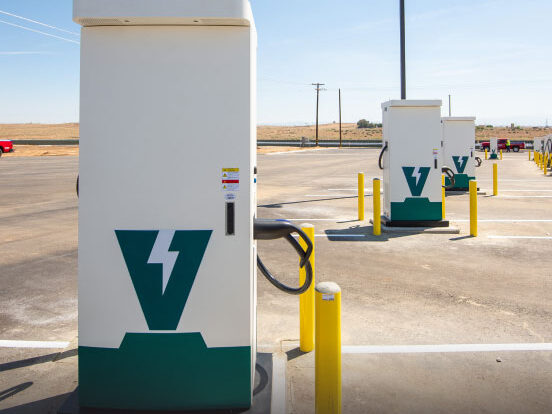
WattEV is actively expanding. We have six depots operational in California today, with twelve more in development along the I-5, I-15, I-40, and I-80 corridors. The BNEF Pioneer recognition does not change any of that work. But it reflects something real about where WattEV stands in the broader energy transition. Not as a pilot program or a proof of concept, but as an operating business with seven million miles of real-world data demonstrating that the model works.
We are grateful for the recognition. More than that, we are focused on the next million miles.